
THE CONTEMPORARY FACE OF CERAMIC HERITAGE IN ÇANAKKALE
The 1st International Çanakkale Ceramic Symposium was held between July 18th and August 7th, spearheaded by Çanakkale Onsekiz Mart University- Çanakkale Ceramics Research, Development and Application Center (ÇASEM), in collaboration with Çanakkale Municipality- Ceramic Museum and Kaleseramik- Kale Design and Art Center.
PROF. YEŞİM ZÜMRÜT
The 1st International Çanakkale Symposium, held in Çanakkale, a city synonymous with its deep-rooted ceramic tradition and heritage, was chaired by Prof. Yeşim Zümrüt, and managed by representatives of the three main stakeholders: Prof. Yeşim Zümrüt, Prof. Ayşe Güler, Assoc. Prof. Müjde Yücel Coşar, Dr. Lecturer Mehmet Coşar, Research Assistant Dr. Canalp Sipahi, and Lecturer Necati Işık, Lecturer Arzu Doğan, and Technician Murat Biçer were responsible for managing the academic, artistic, and technical processes of the symposium.
Following approximately a year and a half of preparation, the symposium was designed as a comprehensive organization bringing together art, design, education, and ceramics, encompassing everything from production and theoretical studies to exhibitions, practical training, and public space projects.
Accordingly, 14 artists from Türkiye and various other countries produced ceramic sculptures for public spaces in a public setting within the symposium's production area located in the city center for approximately 20 days. The openness of the artists' production processes to the audience allowed for an experience of ceramics not only through the final product but also through the design, shaping, surface, technique, firing, and transformation processes.
Ceramic Production Integrated with the City and a Ceramic Route
The resulting artworks were permanently positioned in a connected manner along the Çanakkale coastline, in the area known as Eski Kordon, at the end of the symposium. Thus, the first step was taken to make the city's ceramic identity visible in daily life and to create a ceramic route that can be experienced on foot, accompanying daily routines.
Parallel to the applied production process of the symposium, a comprehensive academic and artistic program was carried out. Within the scope of the program, 51 international online paper presentations were given. In addition, a Cultural Heritage and Art Forum was organized with the participation of 7 invited speakers and 4 guests of honor. 8 applied workshops were conducted under the guidance of expert artists, academics, and craftspeople.
In addition, an online international juried mixed ceramics exhibition and two national and one international physical exhibitions in different venues of the city were presented to the audience.
This process, which addressed contemporary approaches in the fields of art, design, education and ceramics in a multifaceted way, enabled different disciplines to come together. The studies carried out during the symposium revealed that ceramics is not only a material or a field of production; it is a multidimensional field that can be evaluated through its relationships with cultural heritage, art, design, education and urban life.
Artists and the Collective Production Process
The artists participating in the symposium were Assoc. Prof. Ali Temel Köseler (Türkiye), Attila Kertesz (Hungary), Lecturer Dr. Aziz Baha Örken (Türkiye), Danielle O’Malley (United States), Gökçe İrten (Türkiye), Prof. Kaan Canduran (Türkiye), Research Assistant Dr. Kamuran Ak (Türkiye), Dr. Lecturer Mehmet Coşar (Türkiye), Murat Biçer (Türkiye), Nizam Orçun Önal (Türkiye), Olga Siruk (Russia), Assoc. Prof. Sayumporn Kasornsuwan (Thailand), Lecturer Sunbin Lim (South Korea) and Young Soo Kim (South Korea).
For approximately 20 days, 37 students and graduates took part in the project, working alongside and assisting the artists. The production and firing area was not only a workshop where works were created, but also an important platform for ceramics education, collective production, and sharing experiences. Artists observed each other's production methods, students experimented with different techniques, and academics and the technical team worked together.
Experiencing Fire in the Public Sphere
One of the most special and striking aspects of the symposium was the inclusion of on-site firing kilns in the production process. Two large gas/wood kilns, specially manufactured by Kaleseramik, measuring 2.60 meters in height and 1.20 meters in base diameter, as well as three gas kilns of different sizes manufactured by Kale Frit and two electric kilns provided by Çanakkale Municipality and ÇASEM, were used in the production process.
Thanks to the on-site firing opportunity, artists were able to complete their works in the production area and carry out the firing phase in front of the audience. These kilns also became part of the symposium's unique public experience. The audience had the opportunity to watch not only the artists' work production but also the kiln preparations, the firing processes of the works, and the transformation of ceramics with fire, led by Kaan Canduran, Aziz Baha Örken, and Canalp Sipahi.
Especially in the evening hours, the firing of kilns exceeding 1100°C, the light of the glowing ceramics, and the visual effect of the fire transformed the production process into a public performance. Alongside Young Soo Kim's raku firing and Muhammet Emir Taşdemir's luster firing, the firing process of a ceramic sculpture by Aziz Baha Örken, an expert in on-site firing kilns, was also presented to the audience as a special event held in a public space.
Take Care of Your World
The "Young People Creating for the City: Take Care of Your World" workshop, held as part of the symposium, was also an important study in terms of the relationship that young artists establish with the city. In the panel, conducted by Simge Abay, Director of Kale Design and Art Center, Assoc. Prof. Müjde Yücel Coşar, and Research Assistant Dr. Canalp Sipahi, the topics of ceramics being more than just a material, but a powerful space for expression that connects with the city, the "Take Care of Your World" approach, and the use of art and ceramics in public spaces were discussed with young artists.
Following the workshop, 37 assistants who participated in the symposium designed and collectively produced 9 large-scale sculptures in line with this theme. Thus, students went beyond simply assisting artists and became direct participants in the urban production process.
Practical Ceramics Workshops
As part of the "Ceramics Workshops in Çanakkale," a parallel event of the symposium, five-day practical workshops were held for artists, designers, students, and ceramics enthusiasts from different provinces of Türkiye, with limited quotas. These workshops provided training on traditional Çanakkale ceramics, including brush decoration, potter's wheel, mold casting, and ceramic basket weaving. The workshops were led by Burak Çiftçi, Hilal Yaman Taşkıran, Muhammet Onat, Necati Işık, Necmi Tekin, Muhammet Emir Taşdemir, Sinem Kınay, and Şerafettin Benek. These workshops played an important role not only in preserving Çanakkale's traditional ceramics production knowledge but also in transferring it through practical training and connecting it with different generations.
Cultural Heritage and Art Forum
The “Cultural Heritage and Art Forum,” one of the important academic programs of the symposium, was moderated by Prof. Lerzan Özer, Prof. Ayşe Güler, Assoc. Prof. Müjde Yücel Coşar, and Tuğçe Sipahi. İsmail Bütün, a valuable master potter from Çanakkale and recipient of the Living Human Treasure award, participated as the Guest of Honor of the forum.
The forum addressed the university's technical, academic, and artistic infrastructure, its expertise in ceramics, its mission, and strategic goals; the local government's approach to preserving its tradition and future in the context of urban areas and city identity; and the industry's technical infrastructure, production capabilities, and organizational capacity. It was evaluated how these three structures can complement each other with their different working methods and areas of expertise; through completed projects and experiences that emerged during the symposium process. Thus, it was demonstrated that the coming together of the university, local government, and industry towards a common goal can create a sustainable and strong cooperation model in the field of ceramics.
In the forum, where Prof. Candan Terwiel and Prof. Sevim Çizer contributed as a speaker and session chair, Prof. Dr. Mehmet Üstünipek, Prof. Lerzan Özer, Rana Aydın, Fecri Polat and İsmail Erten contributed with perspectives from different disciplines in the sessions titled "Cultural Heritage, Çanakkale, Art and the City" held on August 1, 2026.
Exhibitions and ÇASEM Art Studio
The exhibition program held within the scope of the symposium also achieved wide participation on a national and international scale. As part of the ÇASEM Art Studio International Guest Artist Program, Emre Can's solo exhibition titled "Çanakkale Ceramics: Archaeology of Memory"; the International Invited Group Ceramics Exhibition consisting of 57 works; the ÇASEM Collection Exhibition and the International Juried Online Group Exhibition featuring 54 works met with the audience in different galleries of the city and on an online platform. These exhibitions contributed to the connection of Çanakkale's traditional ceramic heritage with contemporary productions, the visibility of different artists and approaches in the city, and the strengthening of Çanakkale's visibility in international ceramic art.
The Cultural and Historical Texture of Çanakkale
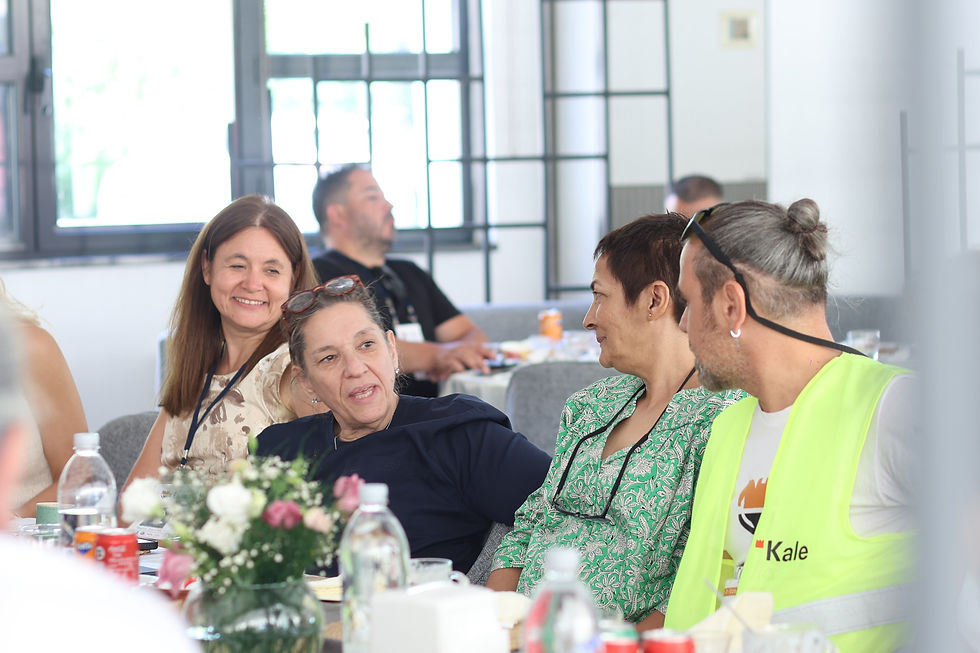
The symposium program was not limited solely to production, education, and exhibition activities. In order to allow invited artists to become closely acquainted with the cultural and historical texture of Çanakkale, tours were organized to the Çanakkale Ceramic Factory, the Troy Museum, the Ceramic Museum, and the ancient city of Assos, as well as to the city's ceramic production and cultural areas.
Zeynep Bodur Okyay, President and CEO of Kale Group, hosted the artists, students, and symposium team at the Çanakkale Ceramic Factory, offering them the opportunity to learn about the factory's production processes firsthand. She also visited the symposium site, meeting with artists, students, and team members, and exchanging views on the symposium's production process, the work undertaken, and the experiences of young people. This meeting created an important sharing environment where industry, academia, and the arts directly communicated.
Conclusion: The Symposium as a Beginning
We consider the 1st International Çanakkale Ceramic Symposium not as an end, but as a long-term beginning. With the permanent ceramic works produced within the scope of the symposium, the first steps of a ceramic route that can be experienced by walking through the flow of daily life routines in Çanakkale have been taken; the relationship between art, city, education, cultural heritage and production has been transformed into a concrete experience.
We believe that this process, which started with the symposium, will lay the groundwork for new works that carry Çanakkale's deep-rooted ceramic tradition into the future with contemporary productions. Together with the projects to be developed in line with the goal of hosting the European Ceramic Route in 2028, these works will make lasting contributions to Çanakkale's visibility in the field of ceramics on a national and international scale and to the cultural and artistic life of the city.
With the responsibility and pride of having served as the director of the Çanakkale Ceramics Research, Development and Application Center, established in 2000, for the past 10 years, I am deeply honored to have spearheaded such a comprehensive organization, bringing together different fields of art, education, design, and ceramics, together with my team.
Recognizing that plans made on paper and hours-long meetings cannot be realized without a strong and harmonious team, I believe the most important contribution to the success of this symposium lies in the coming together of all our stakeholders around a common mission and vision, and in the dedication, solidarity, and problem-solving abilities demonstrated by each team and board member within their respective areas of responsibility.
On this occasion, as Çanakkale Onsekizmart University ÇASEM, we would like to express our heartfelt gratitude to our main stakeholders, Çanakkale Municipality Ceramic Museum and Kaleseramik KTSM; to our honorary presidents, our esteemed Rector Prof. Dr. R. Cüneyt Erenoğlu; to the Mayor of Çanakkale, Mr. Muharrem Erkek; to the Deputy General Manager in charge of Operations at Kaleseramik, Süleyman Soysal; to Ms. Zeynep Bodur Okyay, President and CEO of Kale Group, and Mr. Osman Okyay, Vice President of Kale Group, for their participation and support throughout the process; to the Deputy Mayor of Çanakkale Municipality, Mr. İrfan Dehmen; to our valuable artists who participated in the symposium with their works; to our invited speakers who contributed to the theoretical framework of the symposium with their online presentations from different disciplines; to our valuable participants who contributed to the Cultural Heritage and Art Forum; to our workshop facilitators; to all our team and committee members; to our students and assistants; and to our viewers who did not leave us alone with their visits.


Yorumlar